
A Seasonal Diary of Almond Farm Life: Bloom, Irrigation, and Harvest
A month-by-month look at the working year in an almond orchard, from winter pruning and the race to pollinate at bloom to irrigation, hull split, and the harvest rush.
The orchard keeps its own calendar, and it does not consult the one on the kitchen wall. A dormant tree in January is already deciding what next summer's crop will look like, and a warm afternoon in February can pull bloom forward by days. What follows is the working rhythm of a year here — the jobs that fill the weeks between the first pruning cut and the last trailer load. It is written for anyone tending a handful of trees in a garden or a few hundred on a slope, and for anyone who simply wants to know what happens between one harvest and the next.
Winter: The Pruning Months
Pruning starts once the leaves are down and the trees are fully dormant, and it runs until the buds begin to swell. In most almond country that means a stretch of weeks in the heart of winter, worked around frost and wet ground. The goal is not to sculpt a pretty tree. It is to let light into the centre of the canopy, keep air moving through it, and leave enough young fruiting wood for the next few seasons.
Almonds are usually trained to an open centre, with three or four main limbs and a hollow middle. Everything that competes with that shape comes out: dead and broken wood, branches that cross and rub, the vigorous upright shoots that bolt up from the middle of the tree, and the suckers that push from below the graft union. Cut cleanly, leave no stubs, and clean your tools between trees if you have been working on anything diseased.
A common mistake, especially in a young orchard, is pruning too hard. A tree that loses a third of its canopy answers with a burst of leaves and shoots and very little fruit. Take out what needs taking out, then stop.
- Remove dead, diseased, and rubbing branches first — they set the framework for every other decision.
- Clear the centre so that a hand held at chest height can see daylight through the tree.
- Keep the lowest scaffold limbs high enough to allow sweeping and shaking equipment to pass beneath.
- Drag brush out of the rows as you go, rather than leaving a tangle that trips you in March.
- Sharpen the blades at lunchtime. Blunt loppers make ragged cuts and tired arms.
The Bloom Window
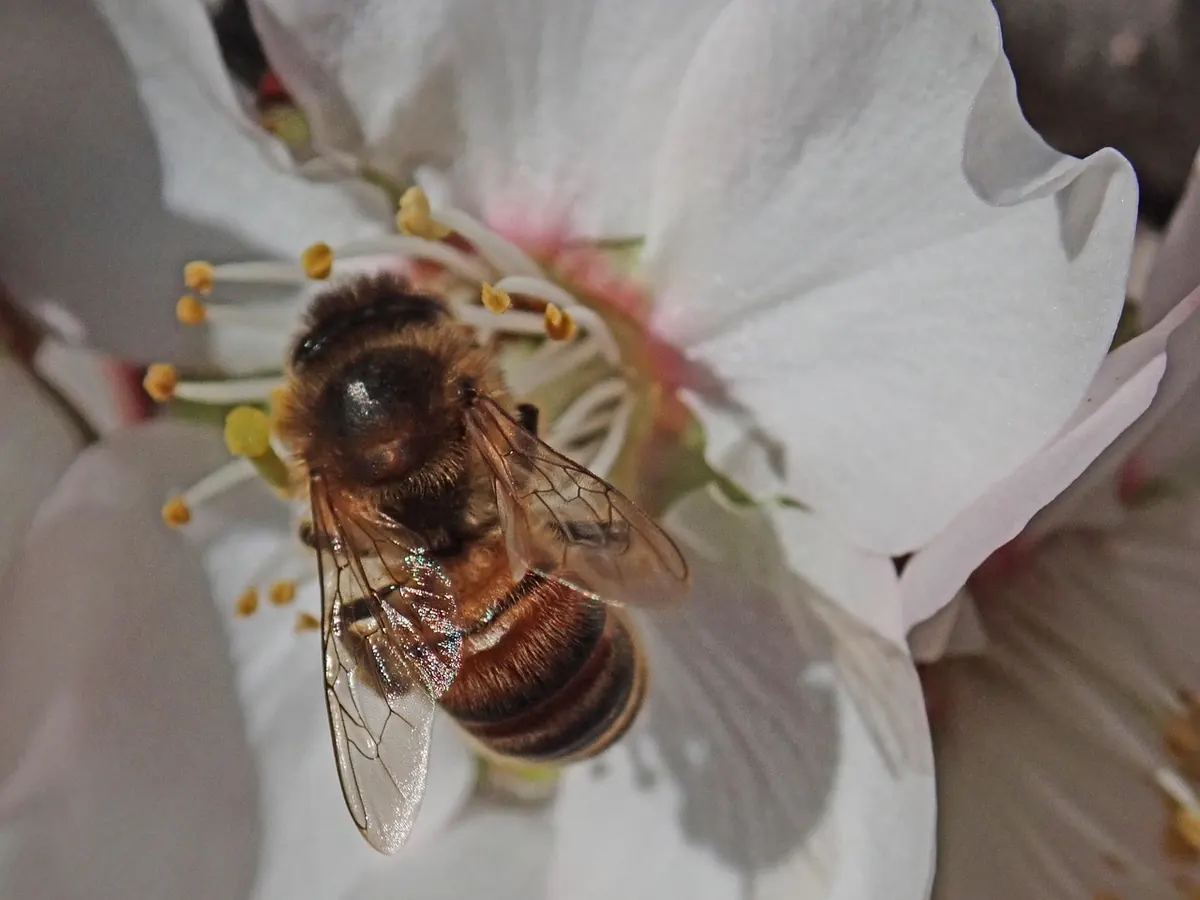
Nothing in the year is as compressed as bloom. The whole crop is decided in something like a fortnight, and much of it depends on weather nobody can control. Almonds mostly need pollen from a different, compatible variety, which is why orchards are planted in alternating blocks rather than solid walls of a single cultivar. The bees do the rest.
Hives go in before the first flowers open, placed in sheltered spots with a clean water source nearby, and left undisturbed. Wind, rain and cold keep bees in the hive, and a wet week in the middle of bloom can cost more fruit than any mistake you will make with a pair of secateurs. Where frost is a real risk, growers run water or fans through the coldest nights; on a small plot, the honest answer is often that you watch the forecast and accept what comes.
One rule is not negotiable: no insecticide sprays while the trees are in flower. Read every label, check with your local advisory service before applying anything, and let the bees work.
From Petal Fall to the First Water
Petals drop, the small green nuts swell, and the orchard moves into a quieter phase that is easy to misread as idle. This is when the tree's demand for water begins to climb, but the soil is often still holding winter rain. Irrigating too early, especially on heavy ground, chases air out of the root zone and does more harm than a few dry afternoons.
The old method still works better than most gadgets: dig a hole a spade deep under the canopy edge and feel the soil. Damp and crumbly, and you can wait. Dry and dusty two hands down, and it is time to start. Keep a note of the date of that first watering; it will shift by two or three weeks from one year to the next, and the pattern is useful.
Irrigation Season: Reading the Orchard
Once the season starts, irrigation becomes the main job and the main worry. Drip lines and micro-sprinklers are the usual choices — drip uses less water and keeps the trunk dry, while micro-sprinklers wet a wider band of soil and can help leach salts on some ground. Whichever you run, the principle is the same: fewer, deeper waterings that reach the full root zone, rather than frequent sips that only wet the surface.
Walk the lines while you irrigate. A blocked emitter, a chewed drip tape, or a leaking joint is easy to spot when the system is running and invisible when it is not. Sandy soils need shorter, more frequent cycles; clay holds water longer and punishes overwatering. A tensiometer or a moisture probe takes the guesswork out of scheduling, but it never replaces a look at the leaves at midday, when a tree under stress will slightly roll them.
Signs to check during the season
Look for water pooling anywhere it should not, wet soil against the trunk, salt crusting on the soil surface, and any row that dries faster than its neighbours. Fix these early. By the time the heat of summer arrives, small problems become crop losses.
Hull Split and the Harvest Rush
Somewhere in late summer the hulls begin to split along the suture, opening to show the shell inside. Hull split is the signal, and harvest follows within days to weeks depending on variety and weather. Waiting too long brings trouble: the nuts dry down and become vulnerable to pests and to shattering onto the ground before you can collect them.
- Check the nuts by hand, not by calendar. Split hulls on a good sample of trees mean the block is ready.
- Sweep the orchard floor clean beforehand, so that nuts sit on firm, level ground.
- Shake each tree onto the cleared ground, working in rows so you do not lose track.
- Sweep the fallen nuts into windrows and pick them up before rain or a spell of damp weather sets in.
- Get the crop to the huller promptly, and dry it down properly before storage.
Harvest days are long and dusty, and they are the ones you remember. Keep water on hand, watch for heat, and check that nobody is standing where a branch will fall.
After Harvest: What Sets Up Next Year
The weeks after the last trailer leaves matter more than they look. Trees are tired and still need water while they rebuild reserves for the winter. A light post-harvest irrigation is often worth more than an extra one in July. This is also the window for sowing a cover crop, spreading compost, or simply letting the orchard floor rest and holding weeds down so that next winter's pruning is not a fight.
Leaf or soil analysis taken around now tells you what to correct before the next bloom, and the workshop is the right place to be: blades sharpened, filters changed, the irrigation system flushed and drained, and the sprayer cleaned properly rather than left until spring.
Practical Notes for the Year Ahead
Keep one notebook and write in it weekly. Record the date of first bloom, the date of the first irrigation, the day the bees arrived, and the day harvest began. Within three or four years you will have something no manual can give you: a record of how this particular ground behaves, which blocks dry out first, and how early or late the season is running compared to last time.
Walk the orchard with your eyes open and your hands in the soil, deal with small problems while they are small, and let the calendar follow the trees rather than the other way round.
Photo: Mark Stebnicki / Pexels